editor@jprims.in
9343055451
e-ISSN: 3049-1681
Journal of Pharmaceutical Research and Integrated Medical Sciences

Journal of Pharmaceutical Research and Integrated Medical Sciences

Journal of Pharmaceutical
Research and Integrated Medical Sciences

Advancing knowledge through rigorous peer-reviewed research across multiple disciplines. Join the global community of scholars shaping the future of academic discovery.

📢 Latest Update: New special issue call for papers on "Pharmaceutical Research and Integrated Medical Sciences" - Submit by August 31, 2026

📢 Latest Update: New special issue call for papers on "Pharmaceutical Research and Integrated Medical Sciences" - Submit by August 31, 2026

Important Journal Details

Title:
Journal of Pharmaceutical Research and Integrated Medical Sciences
Journal Short Name:
JPRIMS
e-ISSN (Online):
3049-1681
Year of Establishment:
2024
Frequency of the Publication:
Monthly (1 Issue / month)
Publication Format:
Online
Publication URL:
https://jprims.in
Related Subject:
Multi-DisciplinaryMedical Sciences
Language:
English
Editor-in-Chief:
Dr. Arpan Kumar Tripathi
Editorial Board:
Click Here →
Journal's Email ID:
editor@jprims.in

Download Forms & Formats

Download Hub

Publisher Details

Responsible Person Name:
Dr. Arpan Kumar Tripathi
Name of Publishing body:
AKT Publication
Publisher Website Url:
https://www.aktpublication.com
Address:
H-103, Nandi Parishar, Padmanabhpur, Durg, Chhattisgarh-491001

Journal Features

Rigorous Peer Review

All submissions undergo thorough evaluation by experts in the field to ensure quality and validity.

Global Reach

Published papers reach an international audience of researchers, academics, and industry professionals.

Rapid Publication

Efficient review process ensures timely publication of accepted papers without compromising quality.

Open Access

All published papers are freely accessible online, maximizing visibility and impact of your research.

Publication Procedure

1

Prepare Manuscript

Format your paper according to our guidelines

View Guidelines
style="fill: var(--journal-600);"
2

Submit Paper

Upload your manuscript through our system

Submit Now
3

Peer Review

Your paper undergoes expert evaluation

Learn More
4

Publication

Accepted papers are published worldwide

View Publications
View All Issues
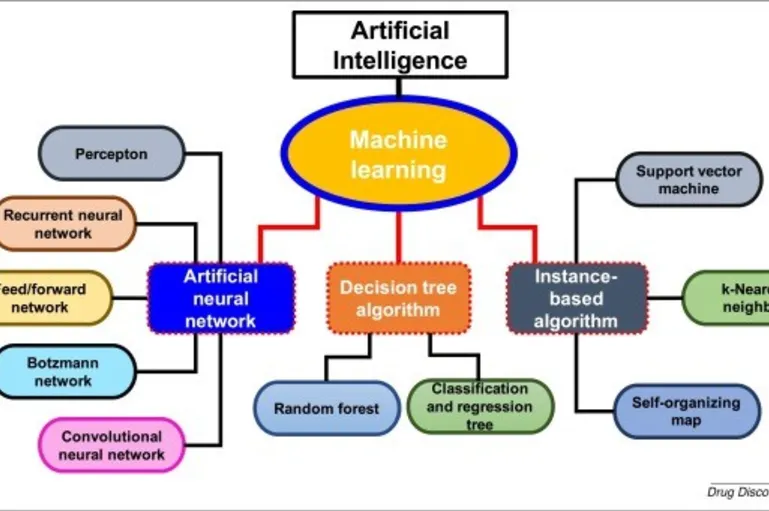
Cover image for Artificial Intelligence in Drug Discovery and Medicinal Chemistry: A Review

Artificial Intelligence in Drug Discovery and Medicinal Chemistry: A Review

Neha Arora, Yogesh Matta, Monu Kumar, Supriya Sarkar, Ajay Kumar

Artificial intelligence (AI) has emerged as one of the most transformative technologies in pharmaceutical research by accelerating drug discovery and medicinal chemistry through machine learning, deep learning, and advanced computational approaches. This review examines the available literature from human clinical studies, computational drug discovery research, systematic reviews, meta-analyses, and clinical investigations, highlighting the applications of AI in target identification, virtual screening, lead optimization, drug repurposing, ADMET prediction, and precision medicine. The review also explores interdisciplinary approaches integrating medicinal chemistry, bioinformatics, structural biology, cheminformatics, and digital healthcare to improve molecular design, reduce research costs, and enhance drug development efficiency. Current evidence indicates that AI significantly improves the accuracy and speed of discovering novel therapeutic compounds while supporting personalized treatment strategies and optimizing clinical trials across diverse therapeutic areas. Despite these advancements, challenges remain regarding data quality, model interpretability, algorithmic bias, regulatory acceptance, and prospective clinical validation. Addressing these limitations through interdisciplinary collaboration and standardized validation frameworks will further strengthen the role of artificial intelligence in advancing drug discovery and medicinal chemistry.
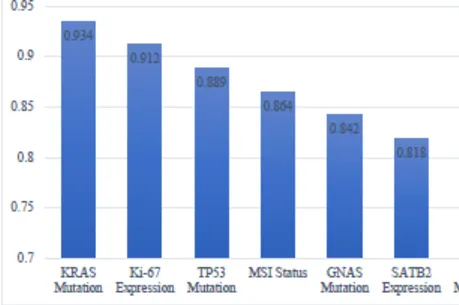
Cover image for Rare Malignancies: Appendix Cancer: AI- Driven Histopathology and Molecular Biomarker Integration in Biopsy, Chemotherapy, and Immunotherapy Trajectories

Rare Malignancies: Appendix Cancer: AI- Driven Histopathology and Molecular Biomarker Integration in Biopsy, Chemotherapy, and Immunotherapy Trajectories

Yash Srivastav, Stuti Verma, Kamini Prajapati, Sandeep Prakash, Rajeev Kumar, Anubha Dhuriya, Anup Kumar Sirbaiya, Shivani Singh

Rare appendix malignancies, such as mucinous adenocarcinoma, goblet cell adenocarcinoma, signet-ring cell carcinoma, and appendiceal neuroendocrine tumors, are rare gastrointestinal cancers with diagnostic and treatment challenges due to their histological and molecular diversity. This study presents an explainable Artificial Intelligence (AI)-based approach that integrates digital histological biopsy images, molecular markers, and patient data to enhance disease classification and prediction of response to treatment. A quantitative methodology was used, based on an anonymized dataset of 200 patients with rare appendix malignancies. The performance of machine learning algorithms, such as Logistic Regression, Random Forest, XGBoost, and LightGBM, was compared using Accuracy, Precision, Recall, F1 score, and ROC-AUC metrics, while SHAP and Grad-CAM methods increased model interpretability. LightGBM outperformed all other methods and achieved the highest accuracy (96.2%), F1-score (95.5%), and ROC-AUC (0.987). KRAS, Ki-67, and TP53 were determined to be the most significant predictors from the biomarker analysis and the overall treatment response prediction accuracy of the combined model was found to be 95.1%. These results show that combining digital histopathology, biomarkers, and explainable AI (XAI) can enhance diagnosis accuracy, treatment response predictions, and clinical decision-making in rare appendiceal malignancies.

Cover image for Artificial Intelligence–Driven Translational Nanomedicine in Oncology: Multistage Targeting Strategies, Clinical Advances, and Future Directions for Liver, Breast, Kidney, and Brain Cancers

Artificial Intelligence–Driven Translational Nanomedicine in Oncology: Multistage Targeting Strategies, Clinical Advances, and Future Directions for Liver, Breast, Kidney, and Brain Cancers

Jaganmai G, K. H UshaDevi

Artificial intelligence (AI) and translational nanomedicine are revolutionizing the field of precision oncology through the use of smart nanoparticles, personalization of drug delivery, and evidence-based therapeutic decisions. This review highlights some of the recent developments in AI-driven translational nanomedicine, with special emphasis on multistage targeting approaches and clinical utility in liver, breast, renal, and brain tumors. Machine learning, deep learning, radiomics, multimodal omics, and nanoinformatics are among the areas discussed in this review. Tumor heterogeneity, vascular barrier, immune microenvironment, renal clearance, and blood-brain barrier penetration in organs are considered in order to highlight the necessity for the development of personalized nanomedicine strategies. Despite the advancements that have been made by AI-guided nanomedicine in drug delivery, pharmacokinetics and safety, there are several obstacles that hinder the clinical application of such technology. The above review suggests future strategies which include standardization in nanoinformatics, patient-derived organoids, digital twins, federated learning, adaptive clinical trials based on biomarkers, and explainable AI for accelerating clinical translation. It may be concluded that the combination of AI and translational nanomedicine offers an attractive approach towards the development of safer and effective cancer treatment options.

Publication Procedure

Learn about our 4-step publication process

Author Guidelines

Review requirements before submitting

Submit Article

Ready to submit your research?

152
Published Articles
1,523
Active Researchers
195
Countries
4.2
Impact Factor